Responsible Waste Management:
Supporting Namibia’s Industries and Environment
Each year, International Zero Waste Day highlights the importance of reducing waste and managing resources responsibly. For growing economies like Namibia, this conversation extends beyond households and recycling. It includes how industries manage complex and often hazardous waste streams.
Across sectors such as mining, oil and gas exploration, infrastructure development, and manufacturing, waste is an unavoidable by-product of progress. What truly matters is how that waste is managed.
Not all waste is the same. Materials such as used oil, contaminated soils, chemical residues, and industrial by-products require specialised handling because of the risks they pose to both people and ecosystems. When managed incorrectly, hazardous waste can contaminate groundwater, damage infrastructure, and create long-term environmental harm.
Responsible waste management ensures these materials are safely contained, transported, treated, and disposed of in accordance with environmental regulations.
For organisations, this process is not just about compliance. It forms part of a broader commitment to Environmental, Social, and Governance (ESG) performance, operational safety, and long-term sustainability.
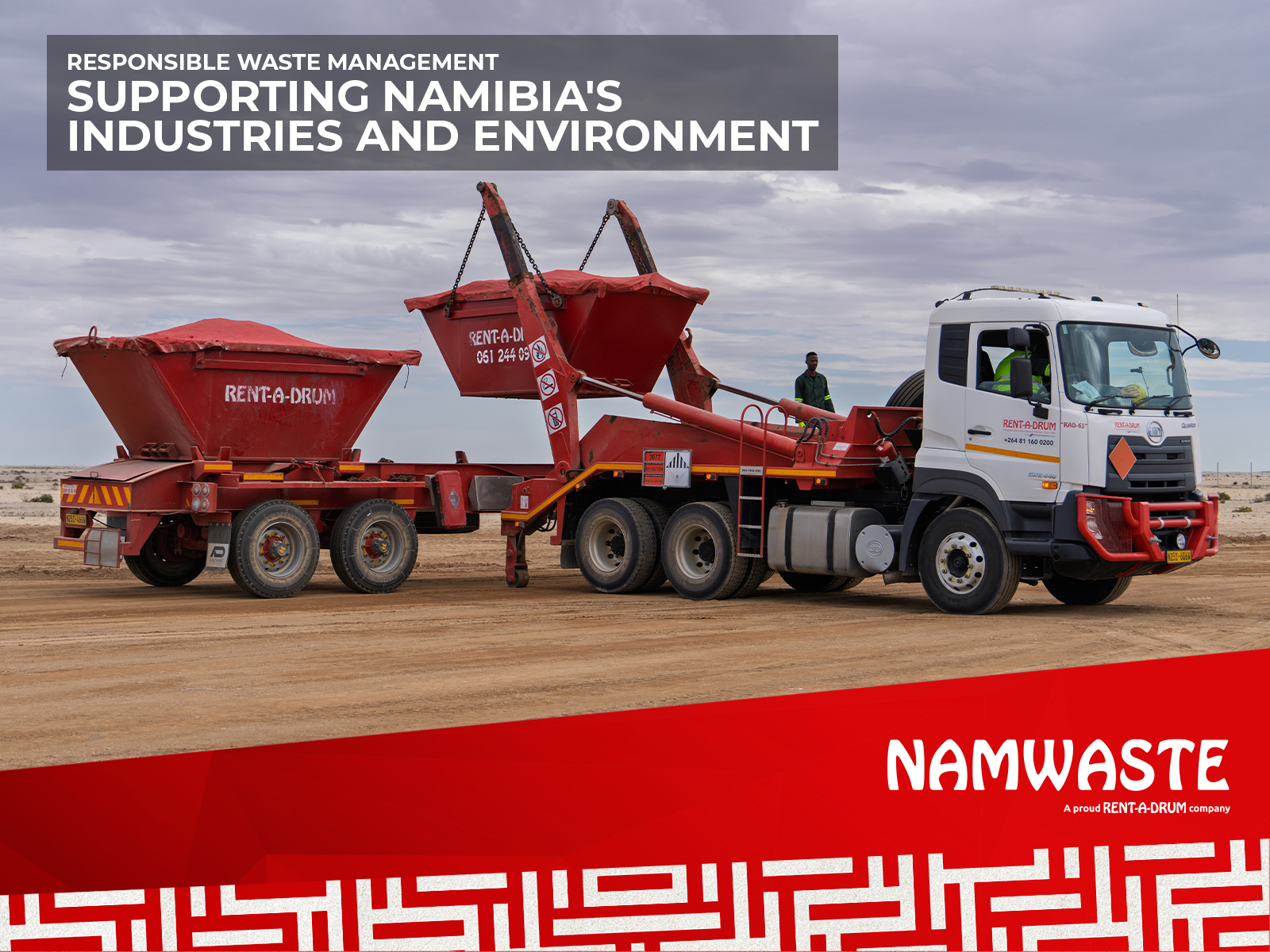
At Rent-A-Drum Namibia, responsible waste management is built on structured systems that manage waste from its origin to its final disposal. This includes safe collection, specialised transport, proper classification of waste streams, and treatment processes that reduce environmental risk.
A key part of this system is the development of modern infrastructure, such as the Namwaste Management Facility, designed to manage hazardous and industrial waste in a controlled environment. Facilities like these use engineered containment systems, protective liners, drainage controls, and ongoing environmental monitoring to ensure waste is isolated safely from surrounding soil and groundwater.
Before any waste reaches this stage, it must first be analysed and classified. Laboratory testing determines the composition of waste streams and ensures the appropriate treatment or disposal method is applied. This scientific approach ensures that hazardous materials are handled responsibly at every stage of the process.
Behind these systems are trained professionals who work daily to ensure that waste is managed safely and sustainably. From field technicians and environmental specialists to logistics teams and compliance experts, responsible waste management is a collaborative effort.
As Namibia’s industries continue to grow, so does the need for reliable waste management partners who understand both operational demands and environmental responsibility.
International Zero Waste Day serves as a reminder that sustainable progress requires thoughtful systems, responsible infrastructure, and strong industry partnerships.
By investing in safe waste management solutions today, Namibia can continue to support economic growth while protecting the environment for future generations.