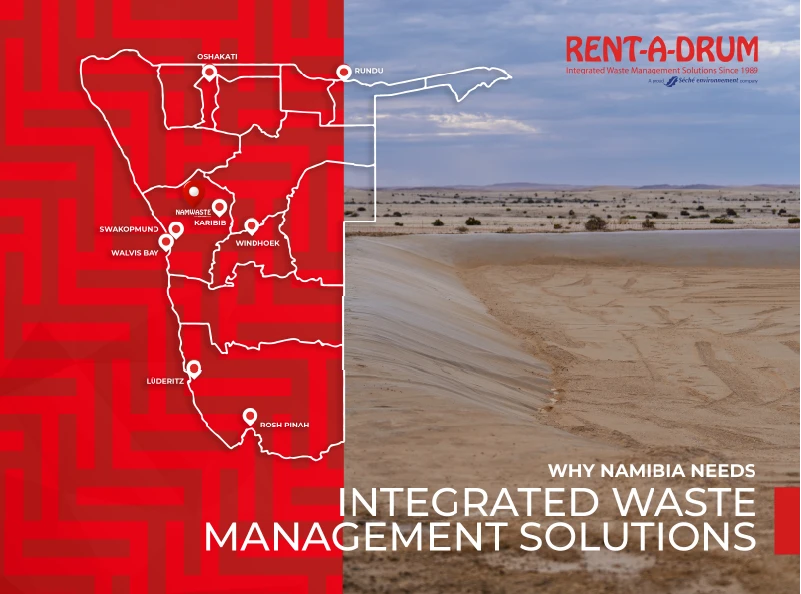
Why Namibia Needs Integrated Waste Management Solutions
As Namibia’s industries continue to grow, so does the complexity of the waste they generate. From manufacturing and mining to construction, logistics, and commercial operations, businesses across sectors are producing waste streams that require careful handling, compliance, and accountability.
Yet, many organisations still rely on fragmented waste management systems, using separate providers for collection, disposal, and compliance. While this may appear manageable on the surface, the reality is often far more costly.
The true risk lies in the gaps.
When waste management is not integrated, accountability becomes diluted. Documentation may become inconsistent, hazardous materials can be improperly handled, and compliance requirements may be overlooked. In highly regulated industries, these gaps do not just create inefficiencies they introduce operational, legal, and environmental risk.
Improper handling of hazardous waste can lead to soil and water contamination, placing surrounding ecosystems and communities at risk. At the same time, non-compliance with environmental regulations can result in penalties, operational delays, and reputational damage costs that extend far beyond waste management itself.
This is where integrated waste management becomes critical.
An integrated approach treats waste management as a single, coordinated system, covering everything from on-site handling and segregation to transportation, treatment, and compliant disposal. More importantly, it ensures full traceability, accurate documentation, and alignment with regulatory standards.
For businesses across Namibia, this translates into improved control, reduced risk, and greater operational efficiency.
Instead of reacting to waste-related issues, organisations can proactively manage them, ensuring hazardous materials are handled correctly, compliance requirements are consistently met, and environmental impact is minimised.
Solutions offered by Rent-A-Drum are designed with this level of integration in mind. By providing end-to-end waste management services tailored to different industries, the company enables businesses to move away from fragmented systems and toward a more structured, compliant, and cost-effective approach.
In an environment where operational efficiency, sustainability, and compliance are increasingly important, integrated waste management is no longer optional it is a strategic necessity.